

You’ve finished another financial year, and someone has asked for your company’s financial statements. Maybe it’s your banker, a shareholder or your accountant preparing your tax return. Now you’re wondering, “Do I actually need an audit?” It’s a common question for business owners.
The word audit can sound serious, expensive and complicated, especially when you’re unsure what your business actually needs. But here’s something worth knowing: not every company needs an audit to prepare professional financial statements or meet its reporting responsibilities.
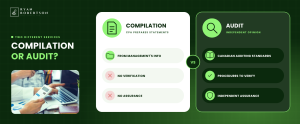
An audit and a compilation engagement serve two different purposes. An audit provides independent assurance about financial statements, while a compilation engagement involves a CPA preparing statements using financial information provided by management, without expressing any assurance.
So, how do you decide which one makes sense for your business? It depends on who needs your financial statements, why they’re requesting them and what level of assurance they expect. Your legal obligations, ownership structure and lender agreements all matter.
In this guide, we’ll explain the differences in simple terms, explore situations where a compilation engagement may be appropriate and discuss when an audit is still necessary.
What Business Requirements Can Make an Audit Unnecessary?
Not every corporation is legally required to have an audit every year. Whether your business needs one depends on its legal obligations and the expectations of people using its financial statements. Some privately held corporations may qualify for an audit exemption under applicable corporate legislation.
For example, under the Canada Business Corporations Act, shareholders of a corporation that isn’t a distributing corporation may resolve not to appoint an auditor. However, all shareholders must consent, and the resolution is only valid until the next annual meeting.
Ontario has a similar provision under its Business Corporations Act. A corporation may qualify for an audit exemption if it isn’t an offering corporation and all shareholders consent in writing. This means the exemption isn’t automatic and requires the appropriate consent.

Your corporation’s status and shareholder agreements also matter when determining whether an audit can be waived. The necessary paperwork must be completed properly for the exemption to apply. These requirements should be checked every financial year rather than assumed.
Once you’ve confirmed your legal obligations, consider why you actually need financial statements. Many privately held businesses use them for internal planning, tax preparation or general reporting instead of providing independent assurance to outside parties.
In these situations, a compilation engagement may meet your reporting needs. However, don’t assume an audit is unnecessary just because your business is privately owned. Review your corporate legislation, shareholder agreements, financing arrangements and other reporting obligations first.
How Much Financial Assurance Does Your Business Actually Need?
The right engagement depends on how your financial information will be used and who will rely on it. There’s an important difference between preparing financial statements and providing independent assurance about the information they contain.
During a compilation engagement, a CPA organizes financial information provided by management into properly structured statements. The CPA also issues a compilation engagement report explaining that no assurance is provided on the information.
An audit involves a different process. The auditor performs procedures under Canadian Auditing Standards and provides an independent opinion on whether the financial statements are fairly presented. A review engagement sits between these services and provides limited assurance.

So, which option makes sense for your business? It helps to consider the people using your financial statements and what they expect from the information.
- Internal Financial Planning: If you mainly want to understand business performance, track expenses and make everyday decisions, professionally prepared financial statements may be enough without independent audit assurance.
- Tax Preparation: Compiled financial statements can organize your financial records into a consistent format. This makes it easier for your accountant to prepare your corporate tax return using structured financial information.
- Lender Requirements: Banks have different reporting expectations. Some accept compiled financial statements, while others require reviewed or audited statements. Always check your credit agreement before choosing an engagement.
- Shareholder Expectations: Owners actively involved in running the business may feel comfortable using compiled financial information. However, outside or passive shareholders may expect independent assurance before relying on those statements.
- External Reporting Requirements: Regulators, contracts, grants and organizational rules may specify which financial reporting engagement you need. If a requirement calls for an audit, your personal preference cannot replace it.

One important detail should never be overlooked: a compilation engagement does not provide assurance on your financial statements. An audit provides independent assurance, which makes these services very different.
The prescribed Ontario compilation report wording also makes this distinction clear. It states that the CPA hasn’t performed an audit or review and therefore expresses no assurance about the financial statements.

5 Business Situations Where a Compilation Engagement May Be a Better Fit
Now let’s look at some common business situations. A compilation engagement may be suitable when your company needs professionally prepared financial statements but doesn’t require independent assurance from an auditor.
The important thing is understanding what your business and stakeholders actually need. Your company doesn’t automatically need an audit simply because it prepares financial statements every year.
Here are five situations where a compilation engagement may be worth considering:

- Small Privately Held Businesses: A closely held company that needs organized financial statements for its owners, accountant or other permitted users may find that a compilation meets its reporting needs.
- Owner-Managed Companies: When the same people own and manage the business, compiled statements can help them understand financial performance, review expenses and make business decisions without requiring independent assurance.
- Businesses With Straightforward Financial Activities: A company with relatively uncomplicated transactions may find a compilation practical, provided its legal obligations and reporting requirements don’t call for something more.
- Businesses Preparing Financial Statements for Tax Purposes: Compiled statements help organize year-end financial information into a consistent format, making it easier to prepare corporate tax returns using properly structured records.
- Businesses Without External Assurance Requirements: If no law, contract, lender or stakeholder requires an audit, a compilation may be a reasonable option to discuss with your CPA.
However, remember that having a small business or straightforward financial records doesn’t automatically make you eligible. Your legal obligations and reporting requirements should always guide the final decision.
When a Compilation Engagement Is Not an Appropriate Substitute for an Audit
A compilation engagement cannot replace an audit when the law requires an audit or an agreement specifically requests audited financial statements. This applies even if your business prefers a simpler or less expensive reporting option.
For example, distributing corporations under the CBCA and offering corporations in Ontario generally cannot use the shareholder-consent exemption. You may also need an audit if the required shareholder consent hasn’t been obtained.
The same applies when a lender, investor, regulator or another external party specifically requests audited financial statements. If audited statements are a condition of financing, funding or a contract, a compilation won’t satisfy that requirement.
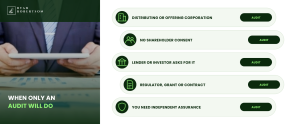
There’s another important point to consider. If you or the people relying on your financial statements want independent assurance about their accuracy and reliability, an audit is designed to provide that level of confidence.
A compilation doesn’t involve procedures to verify the financial information provided by management. The CPA cannot express an audit opinion on compiled financial statements. This isn’t a weakness; it simply means the service has a different purpose.
Before choosing an engagement, confirm your reporting obligations in writing. Reviewing your shareholder agreement, loan conditions and other contracts early can help you avoid paying for the wrong service or preparing financial statements that need to be redone.

What Financial Reporting Factors Should You Consider Before Choosing an Engagement?
Choosing between a compilation and an audit becomes easier when you understand what your business actually needs. Instead of picking one based on cost or familiarity, take some time to review your financial reporting responsibilities.
Think of the following points as a checklist to discuss with your CPA. Each factor helps determine which engagement suits your business, your stakeholders and the way your financial statements will be used.

- Legal and Regulatory Requirements: Start by checking the corporate legislation that applies to your business. Confirm whether an audit is mandatory or whether your corporation can qualify for an exemption.
- Business Ownership Structure: Consider who owns the company, how involved they are in daily operations and what your shareholder agreement says about financial reporting and independent assurance.
- Stakeholder Requirements: Identify every lender, investor or outside party receiving your financial statements. Check what each one expects so you don’t prepare statements that fail to meet their requirements.
- Purpose of Financial Statements: Decide whether you mainly need financial statements for internal planning, tax preparation, financing or external reporting. Their intended use can influence the engagement you need.
- Required Level of Assurance: Ask whether professionally prepared financial statements without assurance are sufficient or whether someone needs an independent opinion about the information being reported.
- Financial Reporting Complexity: Consider the types of transactions your business handles and how complicated its financial activities have become. This can help identify whether additional reporting procedures may be appropriate.
- Engagement Costs and Resources: Compare the fees, preparation time and information your team needs to provide for each engagement. Consider the value of the service alongside your actual reporting requirements.
Explore Professional CPA Support for Your Business’s Annual Financial Reporting With Robertson CPA!
Choosing the right financial reporting engagement matters because the wrong decision can cost you in different ways. You might pay for an audit you don’t need or discover that your lender requires more assurance than a compilation provides. At Robertson CPA Professional Corp, compilation engagements are prepared using financial information provided by management, in accordance with the applicable Canadian accounting standards, without conducting an audit or review.
The process starts with a consultation to understand your business and reporting needs. The team then collects your financial information, checks it for completeness and consistency, and prepares statements such as the balance sheet, income statement, cash flow statement and changes in equity. You can review the completed statements before final delivery, with support available for submitting them to lenders or other stakeholders.

Robertson CPA also supports Ontario businesses with bookkeeping and accounting, corporate tax filing and small business tax preparation. If you’re unsure whether your business needs a compilation or an audit, contact Robertson CPA to discuss your financial reporting requirements and understand which service may be appropriate.

Frequently Asked Questions (FAQs)
Q1. What is the difference between a compilation engagement and an audit?
In a compilation, a CPA prepares financial statements using information provided by management and expresses no assurance. An audit involves independent procedures under Canadian Auditing Standards and provides an opinion on whether the financial statements are fairly presented.
Q2. Does a compilation engagement provide any financial assurance?
No. A compilation report states that the CPA hasn’t performed an audit or review and expresses no assurance. The CPA doesn’t verify the accuracy or completeness of the information provided by management.
Q3. Can a small business choose a compilation engagement instead of an audit?
Possibly, but business size alone doesn’t decide it. If your corporation qualifies for an audit exemption and no lender, shareholder or other stakeholder requires audited statements, a compilation may be appropriate.
Q4.When is an audit legally required for a corporation in Canada?
It depends on the corporation’s type and governing legislation. Distributing corporations under the CBCA and offering corporations in Ontario generally cannot dispense with an auditor. Other corporations may qualify for exemptions if the legal consent requirements are met.