
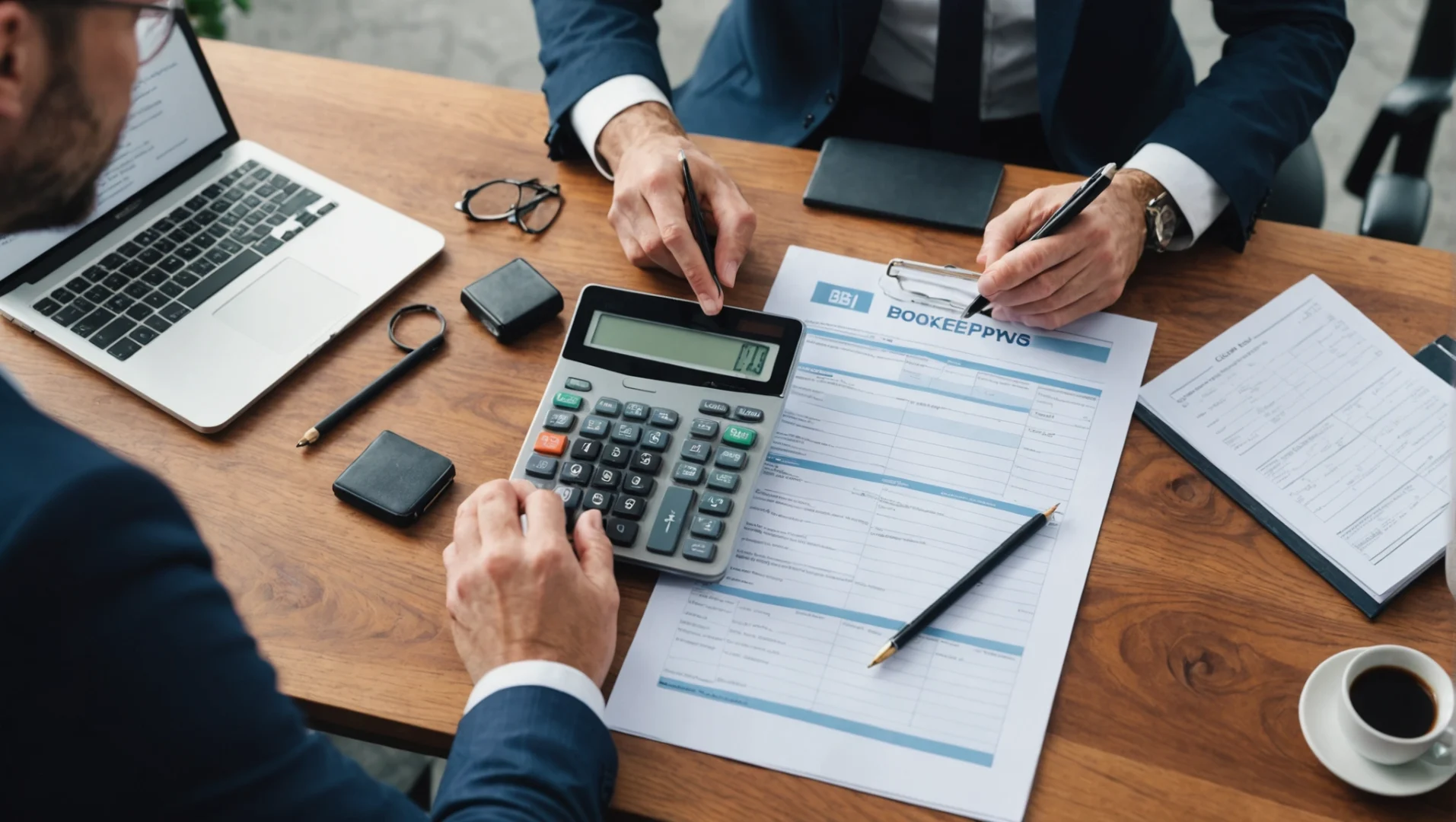
It is mid-March and there is a shoebox of receipts sitting by your bank statement that you haven’t opened since January. Sound familiar? For many small business owners, tax season isn’t stressful due to the tax return. The actual stress is when they attempt to locate financial information that they ought to have documented months before.
Proper bookkeeping can help eliminate the last minute scramble. Your accountant has financial data to work with, rather than a stack of receipts and questions, when you are recording your income and expenses throughout the year. It also helps to identify missing information more easily, before it will cause issues.
So then, what is proper bookkeeping, and when is it time to begin planning for tax season? Let’s take a look at the records and habits that can make a difference, and how organized and disorganized bookkeeping will impact your filing experience.
What Is Bookkeeping and Why Does It Matter for Small Businesses?
Bookkeeping is the process of recording your business’s financial transactions, including income, expenses, payroll, and loan payments. Consider it a business’s monetary diary. Each transaction is entered in the proper category, helping you understand where your money is going and where it is coming from.
However, bookkeeping can be helpful for other things besides your tax return. Organized records enable you to see which customers haven’t paid you, if you have the money for next month’s payroll, and where your business expenses are going. Our accounting and bookkeeping services can ensure that these records are timely and accurate to enable you to make decisions based on current financial information.
These records can also help you in preparing your taxes. The CRA usually mandates that businesses retain books and other relevant documents for 6 years, starting from the end of the final year of tax to which they pertain. Your accountant will need this information when he or she does your business tax return, and if you can keep all of this information organized all year long, it will save you time later.
When Should Small Businesses Start Preparing Their Books for Tax Season?
The best time to prepare your books is not tax season, it’s the whole year round. It’s easier to keep all the tasks in hand if you start in January and stay on top of your records. It also can assist you in spotting errors before you forget the specifics of a transaction.
One of the basic bookkeeping procedures will help your business stay on track. The following 5 checkpoints will keep you organized:
- Ongoing entry: Make sure to record sales, purchases and receipts weekly and not accumulate paperwork at the end of the month.
- Monthly reconciliation: Reconcile Bookkeeping with bank and credit card statements. For instance, you could discover an invoice from a supplier which was paid twice but never showed up in your year end numbers.
- Quarterly reviews: Review your business income, expenses and GST/HST collected. You can also check to see if your tax instalments are still in line with your business earnings.
- Year-end preparation: Close your books, and compile the final paperwork your accountant will need, such as loan statements and asset purchase invoices.
- Structure-based deadlines: Normally, an individual who is a sole proprietor has until April 30 to pay income tax and until June 15 to file, and a corporation has 6 months from the fiscal year’s end to file. GST/HST reporting deadlines vary according to one’s reporting period.
Doing this means you’re not having to arrange a year’s worth of transactions all at once. In fact, you can take care of smaller tasks on a regular basis and hand over more complete records to your accountant when it’s time to prepare taxes.
How Does Accurate Bookkeeping Make Tax Preparation Easier?
Correct bookkeeping provides your accountant with a solid foundation for preparing your tax return. They can look at organized documents, rather than being forced to sift through old receipts and bank statements, to determine the income and verify expenses.
This can minimize the number of follow-up questions and last minute corrections. Bookkeeping is much simpler if a few basic practices are followed, such as:
- Bank reconciliations: Ensure deposits and payments are properly recorded in your books and are consistent with your bank and credit card statements. This helps to detect duplicate entries, missed transactions and recording errors prior to filing.
- Categorized transactions: Your accountant will be able to calculate the total of each category of expenses without looking at each transaction.
- Invoices and receipts: Maintain supporting documents of business expenses and sales. These records are for the purposes of explaining the amounts on your return and for your eligibility to claim input tax credits for GST/HST.
- Financial statements: Your income statement lists all of the income and expenses for your business and your balance sheet lists all of the assets and liabilities of your business. Checking both can help you to identify out-of-the-ordinary figures early.
- Fewer last-minute corrections: With regular bookkeeping, you will discover and correct any mistakes throughout the year rather than at the time you are filing your tax return.
- Less administrative stress: Your accountant is less likely to require additional information if your records are tidy, and you won’t be wasting so much time looking for missing documents.
The main benefit is simple: your accountant can spend more time reviewing your financial information and preparing your return instead of sorting through disorganized records.
Which Financial Records Should Small Businesses Organize Before Filing Taxes?
Compile the documents to substantiate the income and expenses of your business before you file your tax return. It’s important to have all records after tax season as the CRA may require you to explain or substantiate the figures you reported.
Don’t wait till your accountant calls for your bookkeeping. Provide an overview of the different kinds of financial records to begin with:
- Income records: Retain information on all business income, such as e-transfers, deposits and payments that might not be on a sales invoice.
- Sales invoices: Maintain a record of each sales invoice to link up to every customer payment.
- Expense receipts: Keep records of what you bought, how much you paid and how you bought it was related to your business.
- Bank and credit card statements: Review statements to verify payments and look for transactions that weren’t recorded in your bookkeeping system.
- Payroll records: Store employee wage information, source deduction records and the year-end slips issued by your business.
- Loan documents: Write down loan amounts and interest paid to ensure correct financing costs and principal repayments.
- Asset purchases: Maintain equipment, vehicle, and other significant purchase invoices. These costs may be taken as a claim over multiple years instead of one.
- GST/HST records: Ensure that the tax collected from customers and tax paid on purchases to other businesses are tracked. Make sure supplier invoices are organized, as a 2026 Tax Court case illustrates how poorly supported documents can impact an input tax credit claim.
If these records are organized, your accountant will be able to read the information more easily, inquire about missing information before preparing your return. It also helps to keep them in one place so that documents can easily be found if CRA asks for them later.
How Can Bookkeeping Help Identify Tax Deductions and Eligible Expenses?
If your business expenses have been recorded correctly under their respective categories, then perhaps it is easier to spot potentially deductible expenses. Your accountant can check the expense records and identify some of the costs that may meet the criteria of CRA.
But not all business purchases are eligible for a deduction. The cost of the item must satisfy the requirements and the allowable amount could vary depending on the use. Here are the 7 types of expenses you should monitor:
- Office supplies: Keep track of purchases like paper, stationery and software subscriptions that you use to run your business.
- Business travel: Maintain records of travel for business purposes. Keep in mind that generally meals and entertainment is capped at 50% deductible and the business purpose of the meal and entertainment should be documented.
- Professional fees: Keep all receipts for professional services, such as accounting, legal, and other business-related services.
- Business-use expenses: Keep a record of business use of the vehicle and home office expenses. A vehicle logbook, or measurement of a home workspace, can be used to substantiate the amount claimed.
- Bank fees and interest: Keep an eye on charges on business accounts and interest on business loans as these fees may be overlooked if business transactions are not categorized on a consistent basis.
- Capital purchases: Maintain an account of larger equipment and other assets that qualify. Usually these expenses can be recovered over time by using capital cost allowance (CCA), and not deducted all at once.
- CRA rules and circumstances: Deductibility is dependent on the nature of the expense and how it is applied. Your CPA can check out the information and verify which expenses are eligible before they’re deducted.
Proper bookkeeping does not necessarily result in more deductions on your taxes. It just makes it easier to determine expenses, to keep supporting documents and to provide your accountant with the information necessary to determine what you can claim.
What Is the Difference Between Organized and Disorganized Bookkeeping at Tax Time?
A well-established bookkeeping arrangement can make a huge difference in your tax season. Financial data is available for your accountant without having to spend days looking for receipts and fixing old data. Below is a comparison of the two approaches and how they impact some of the tasks that small business owners face.
| Area | Organized bookkeeping | Disorganized bookkeeping |
| Record availability | Receipts and statements are submitted on a monthly basis, which will help you when your accountant asks you for them. | Receipts are strewn in glove compartments and email Inboxes and some may be lost. |
| Expense verification | Each expense is attached to a receipt and a specific business purpose, and it’s easier to substantiate eligible claims. | It is more difficult to verify expenses which might result in costs not being identified or challenged at a later stage. |
| Tax preparation time | Your accountant can begin with records that are reconciled and prepare your tax return. | Additional time is devoted to locating transactions, records and documents, and correcting them prior to filing. |
| Error risk | Monthly reconciliation can be used to find any errors in the year, like double entries. | Errors may only be found when it’s time to do the taxes or if the CRA requests additional information. |
| Visibility into tax obligations | Track the GST/HST owing and upcoming (tax instalments) to plan for payments. | The amount of taxes and when they’re due can be a shock, particularly if they’ve already been paid. |
It all depends on preparation. Regular record updating will give you a better understanding of your finances and less work to complete during tax season.
When Should a Small Business Hire a Professional Bookkeeper or CPA?
When you’re running a small business and the transactions are simple to keep track of, you might be able to handle your bookkeeping yourself. But, when your business expands, maintaining all the records up-to-date can become more cumbersome. A professional bookkeeper can handle your day to day books and a CPA can assist you with tax preparation, financial reporting and planning.
The level of support required will vary for the size and level of financial activity of the business. When you see these 5 signs, it’s time to seek professional help:
- Growing transaction volumes: You may be making more sales and purchases, which means it’s difficult to catch up with recording all transactions on your books each week.
- Complex payroll: It’s hard to keep track of employee wages, source deductions, and payroll records by yourself.
- Missed deadlines: You may have missed tax filing or remittance deadlines and require assistance to get your records and payments on track.
- Unreconciled accounts: You’re having trouble finding out why your bookkeeping balance doesn’t match your bank statements.
- Uncertainty about tax obligations: Not knowing what you owe, what might count as an expense or when it’s due.
If you address these issues before they mount up, bookkeeping is a lot easier to deal with. It also provides you more time to concentrate on your business rather than doing all your financial obligations.
Get Your Business Ready for Tax Season With Professional Bookkeeping Support
Having the books well organized all year round can make the tax preparation process a lot more stress free. Robertson CPA Professional Corp can keep the financial records of small businesses in Ontario, clarifying the company’s income, expenses, and other business activities.
Ryan Robertson and the team handle the bookkeeping, which involves capturing and arranging business transactions and creating periodic financial statements. This will help you have a better starting point when you’re ready to review your finances and file a tax return.
The team also manages payroll and GST/HST returns, ensuring your financial records and reporting remain organized. When you have incorporated your business, our corporate tax services can help you take the next step in your tax preparation process. These services being provided by a single team also means that you won’t be repeating yourself every time when it comes to the explanation of your business records.
Ready to make tax season easier to manage? Explore our accounting and bookkeeping services in Ontario, then contact us to discuss your bookkeeping needs with our team.
Let’s get your books in order now, so you’re not searching for receipts when tax season arrives.
Frequently Asked Questions (FAQs)
Q1. How long do I need to keep bookkeeping records in Canada?
The CRA will generally require businesses to retain records for 6 years from the end of the last tax year to which they pertain. If a record is related to an audit, objection, or other review, they might need to be retained for a longer period of time.
Q2. When do I have to register for GST/HST?
Generally, registration is required when taxable sales are over $30,000 in any calendar quarter or 4 calendar quarters. The rules will vary based on your sales and business situation, so consult your CPA.
Q3. Can I do my own bookkeeping, or do I need a bookkeeper?
If your transactions are manageable and you are able to keep your accounts up to date, you can handle it yourself. As your business evolves or payroll and financial information become complex, however, professional support might be useful.
Q4. Does good bookkeeping lower my tax bill?
Not automatically. While good bookkeeping will help you to determine what expenses you are eligible for and help you avoid recording mistakes, your tax bill will be based on your income and what is allowed by CRA. It provides you financial information that is more accurate and easier to tax filing.